
What Multi-Car Households Pay in West Virginia
You own two or three cars, and you need to know what insuring all of them costs in West Virginia. The figure you find online—average expenditure per insured vehicle—does not tell you what happens when you add a second car to your existing policy, or whether combining two separate policies into one saves money. The multi-car discount exists, but it applies to the policy, not to each vehicle individually, and the way carriers structure it changes what you actually pay.
West Virginia requires $25,000 per person and $50,000 per accident in bodily injury liability, plus $25,000 in property damage liability. Uninsured motorist coverage is mandatory. Every vehicle on your policy must meet these minimums. The state enforces compliance through the Online Insurance Verification Program, which cross-checks registration records against active insurance certificates. When you add a vehicle, the entire policy re-rates based on the new vehicle's attributes, the drivers assigned to it, and the household's combined risk profile.
Compare car insurance rates in your state
Get quotes from licensed carriers — no obligation, no spam, results in minutes.
Get Your Free QuoteWV Annual Expenditure Per Vehicle
This figure reflects single-vehicle policies and does not account for multi-car discounts or household policy structures.
NAIC Auto Insurance Database Report 2023
How the Multi-Car Discount Actually Works
The multi-car discount reduces the total policy premium when you insure two or more vehicles on the same policy. It does not reduce the cost of each car individually. Carriers apply the discount to the combined premium after calculating the base rate for every vehicle and driver on the policy. The discount percentage varies by carrier, but the structure is consistent: one policy covering multiple vehicles qualifies, while separate policies for each car do not.
West Virginia households often assume that adding a second car simply doubles the first car's premium. That is not how carriers rate multi-vehicle policies. The second vehicle re-rates the entire policy based on the household's total exposure. If the second car is newer, more expensive to repair, or assigned to a younger driver, the combined premium can rise more than expected. If the second car is older, driven less, or assigned to a driver with a clean record, the combined premium may rise less than the first car's standalone rate.
The discount applies only when every vehicle sits on the same policy and is garaged at the same address. A car titled to a household member but insured on a separate policy does not count toward the multi-car discount on your policy. Combining two policies after marriage or a household move usually lowers the total premium, but not always. If one policy carries a surcharge from a recent claim or violation, combining can raise the clean policy's rate.
The multi-car discount applies to the policy, not to each vehicle. Separate policies for each car forfeit the discount entirely.
Structuring Coverage Across Multiple Vehicles
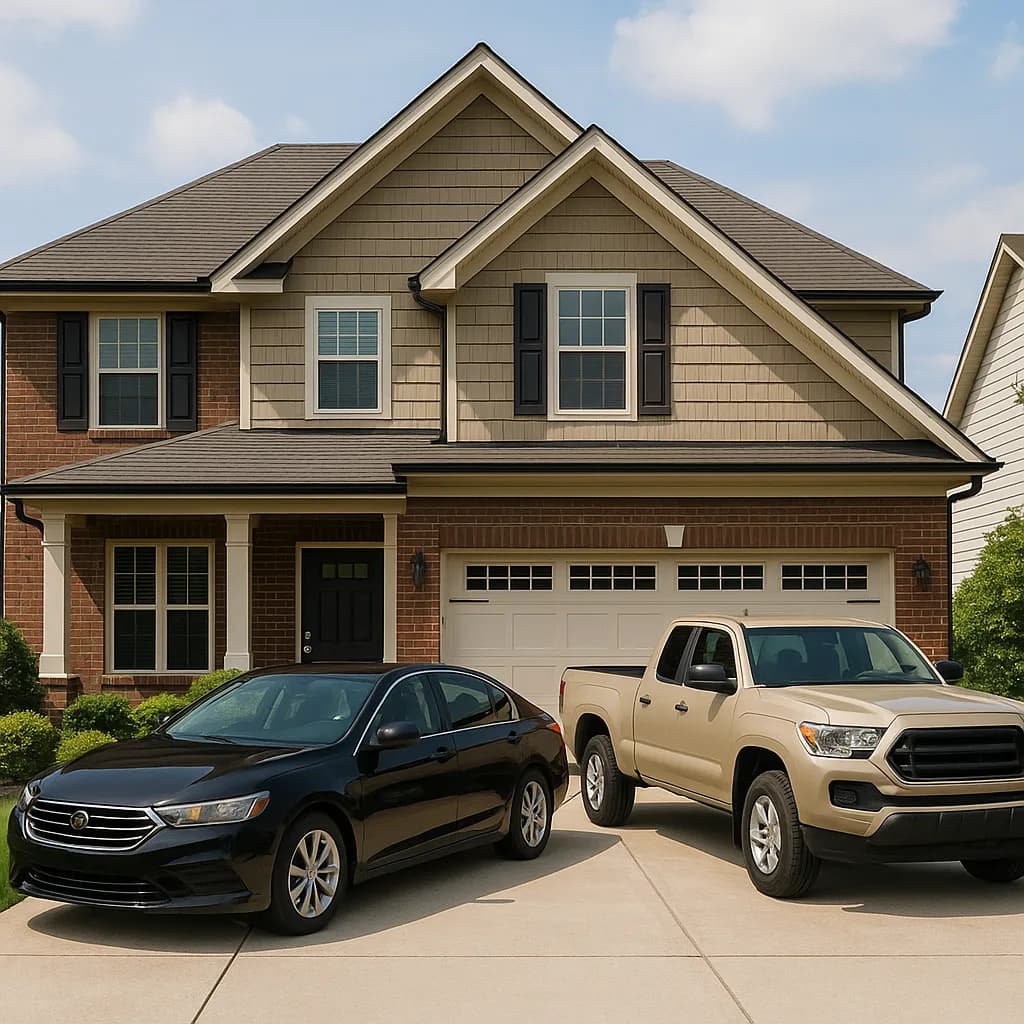
One shared policy covering every household vehicle qualifies for the multi-car discount and simplifies renewal, but a claim on any vehicle affects the entire policy's rate at renewal. Separate policies preserve rate independence—a claim on one car does not re-rate the other—but forfeit the multi-car discount and require managing multiple renewal dates, payment schedules, and coverage limits. Most West Virginia households save money with a shared policy unless one vehicle carries a high-risk driver or a recent claim that would disproportionately raise the combined rate.
Carriers writing multi-car policies in West Virginia include State Farm, Geico, Progressive, Allstate, Nationwide, and Farmers. Each structures the multi-car discount differently. Some apply a flat percentage to the total premium; others reduce the second and third vehicle's base rate before applying other discounts. Compare quotes from at least three carriers, providing the same coverage limits and driver assignments for every vehicle. The lowest single-car rate does not always produce the lowest multi-car rate.
Related Articles


What Drives Cost Differences for Multiple Vehicles
West Virginia permits credit-based insurance scoring, which means your credit history affects your rate. A household with strong credit typically qualifies for lower rates across all vehicles. Carriers also consider the primary driver assigned to each vehicle, the annual mileage for each car, where each vehicle is garaged, and the coverage limits you select. Full coverage—liability plus collision and comprehensive—costs more than minimum coverage, but the difference narrows when you insure multiple vehicles on one policy because the multi-car discount applies to the total premium.
West Virginia recorded 1.63 traffic fatalities per 100 million vehicle miles traveled in 2023, slightly above the national average. The state's uninsured motorist rate was 7.8 percent in 2023. These factors influence how carriers price uninsured motorist coverage, which is mandatory in West Virginia. If you carry only minimum liability limits and an uninsured driver hits your car, uninsured motorist coverage pays for your vehicle's damage and your medical bills up to your policy limits. Raising uninsured motorist limits to match your liability limits adds cost but closes a coverage gap that affects multi-car households disproportionately.
Vehicle theft and comprehensive claims also vary by location within West Virginia. The state recorded 83.3 motor vehicle thefts per 100,000 population in 2024. Urban counties typically see higher theft rates than rural areas, which raises comprehensive premiums for vehicles garaged in cities. If you own multiple vehicles and one is garaged at a different address—a college student's car, a work vehicle parked at a job site—the garaging address for that vehicle changes its rate independently of the other cars on the policy.
WV Uninsured Motorist Rate
7.8%
West Virginia's uninsured motorist rate was 7.8 percent in 2023. Mandatory uninsured motorist coverage protects you when an at-fault driver has no insurance, but the coverage limit you select determines how much the policy pays.
Insurance Research Council 2023
When Combining Policies Raises Cost
Combining two separate policies into one shared multi-car policy does not always lower the total premium. If one policy carries a surcharge from a recent at-fault claim, a speeding ticket, or a lapse in coverage, merging it with a clean policy applies that surcharge to the entire household. The clean policy's rate rises to absorb the higher-risk driver or vehicle. Carriers re-rate the combined policy based on the household's total risk profile, which includes every driver, every vehicle, and every claim or violation in the past three to five years.
West Virginia households merging policies after marriage or a household move should compare the combined quote against maintaining separate policies for at least one renewal cycle. If the surcharge from the higher-risk policy exceeds the multi-car discount, keeping the policies separate preserves the lower rate on the clean policy. After the surcharge rolls off—typically three years from the violation date or claim date—combining policies becomes cost-effective.
Compare Carriers Writing Your Household
West Virginia licenses 18 carriers writing standard and preferred auto insurance, including State Farm, Geico, Progressive, Allstate, Liberty Mutual, Farmers, Nationwide, USAA, Travelers, Erie, CSAA, Amica, Hartford, National General, Root, Clearcover, Dairyland, and The General. Not every carrier writes multi-car policies for every household structure. USAA restricts eligibility to military members, veterans, and their families. Root and Clearcover operate entirely online with app-based underwriting. Dairyland and The General specialize in non-standard and high-risk drivers, which may include households with a recent violation or lapse.
Request quotes from at least three carriers, providing identical coverage limits, deductibles, and driver assignments for every vehicle. The multi-car discount percentage varies by carrier, and a smaller discount on a lower base rate can produce a lower total premium than a larger discount on a higher base rate. Compare the total annual premium for all vehicles combined, not the per-vehicle cost. The carrier offering the lowest rate for your first car may not offer the lowest rate for your second or third.